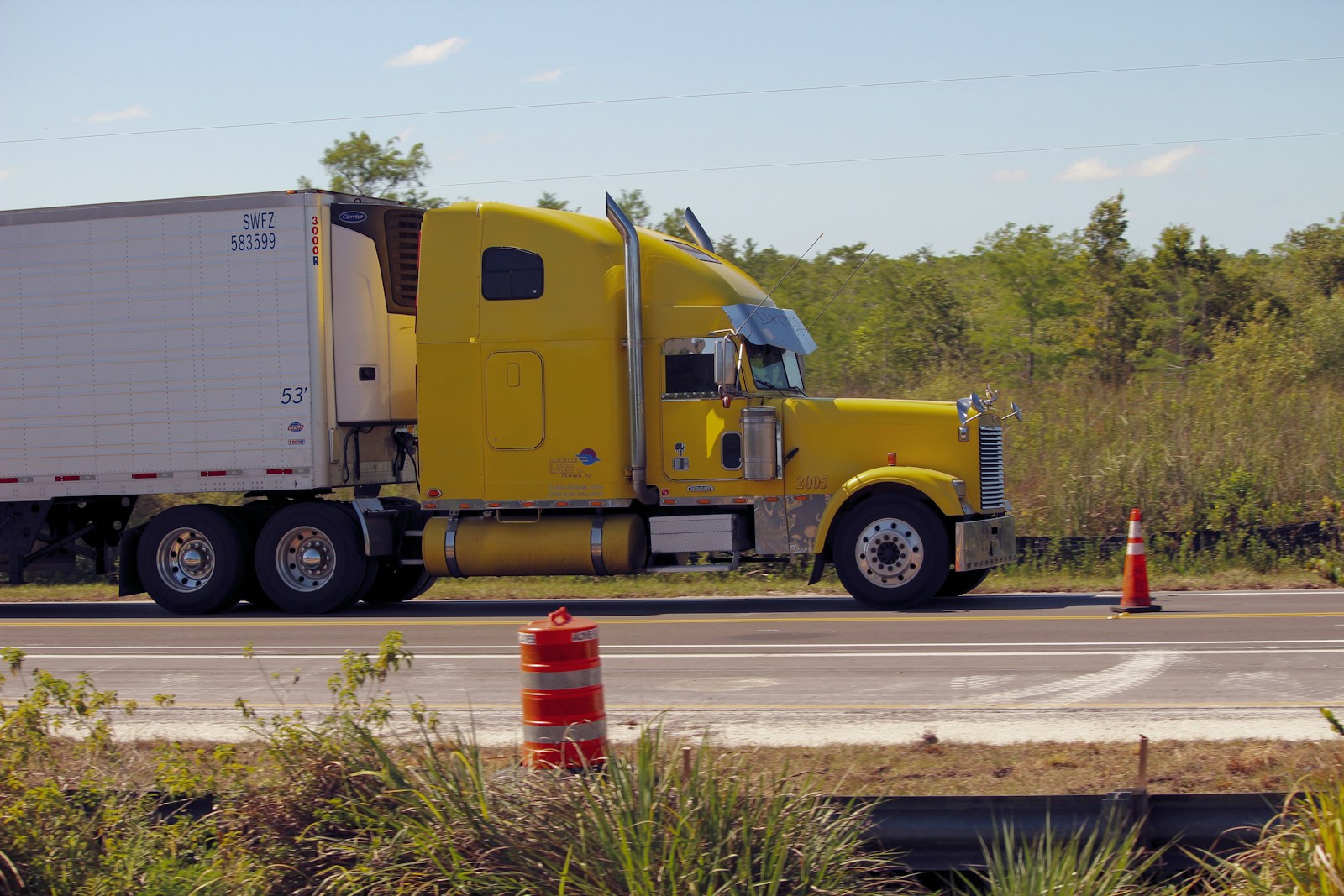
Free CDL Practice Tests for Class A and Class B Drivers
Practice every part of the CDL knowledge exam: General Knowledge, Air Brakes, Combination Vehicles, Doubles and Triples, Tanker, Hazardous Materials, Passenger, School Bus and Pre-Trip Inspection. Each answer shows the reason, so you learn the rule while you test. No sign-up required.
Which CDL Knowledge Tests Do You Need?
Question counts below are typical. Your state may use a different number of questions, so check your state CDL manual.
| Test | Who Needs It and What It Covers | Typical Questions |
|---|---|---|
| General Knowledge | Required for every Class A and Class B CDL. Covers inspection, safe driving, speed and space management, cargo, emergencies, alcohol and hours of service. | 50 |
| Air Brakes | Required if you will drive with air brakes. If you skip or fail it, your CDL gets an L restriction (no vehicles with full air brakes). | 25 |
| Combination Vehicles | Required for Class A. Covers coupling, uncoupling, trailer air systems, rollover risk and off-tracking. | 20 |
| Doubles/Triples (T) | Pulling two or three trailers. You must pass Combination Vehicles first. | 20 |
| Tank Vehicle (N) | Hauling liquids or gases in tanks of 119 gallons or more each and 1,000 gallons or more total. | 20 |
| Hazardous Materials (H) | Hauling placarded hazmat. Also requires a TSA security threat assessment (fingerprints and background check). | 30 |
| Tank + Hazmat (X) | Not a separate test. Passing both Tanker (N) and Hazmat (H) earns the combined X endorsement for hazmat in tanks. | — |
| Passenger (P) | Vehicles designed to carry 16 or more people, including the driver. | 20 |
| School Bus (S) | Driving a school bus. You must also hold the Passenger (P) endorsement. | 20 |
Choose a Practice Test
Turn on JavaScript to take the interactive practice tests. The study guide below works without it.
CDL Study Guide: Key Facts to Know
Review these facts before each test. Click a section to open it.
General Knowledge (Class A and B)
Speed and Stopping
- Total stopping distance = perception distance + reaction distance + braking distance.
- At 55 mph on dry pavement, a heavy vehicle needs about 419 feet to stop (142 ft perception, 61 ft reaction, about 216 ft braking). Air brake lag adds about 32 more feet.
- When you double your speed, braking distance becomes about four times longer.
- Empty trucks can take longer to stop than loaded trucks because there is less traction.
- On wet roads, slow down about one-third. On packed snow, slow down by half or more. On ice, slow to a crawl and stop as soon as it is safe.
- Hydroplaning can happen at speeds as low as 30 mph when there is a lot of water.
Space and Seeing
- Look 12 to 15 seconds ahead. At highway speed that is about a quarter mile.
- Following distance: at least 1 second for every 10 feet of vehicle length below 40 mph, plus 1 more second above 40 mph. A 40-foot truck needs 4 seconds below 40 mph and 5 seconds above.
- Convex mirrors show a wider area but make objects look smaller and farther away than they are.
- Dim your high beams within 500 feet of an oncoming vehicle and when following within 500 feet.
Emergencies and Warning Devices
- Put out warning triangles within 10 minutes of stopping.
- Two-lane or undivided road: 10 feet from the front or rear corner, 100 feet behind, and 100 feet ahead.
- One-way or divided highway: 10 feet, 100 feet, and 200 feet behind the vehicle toward approaching traffic.
- Behind a hill or curve: place the farthest triangle 100 to 500 feet back so drivers get enough warning.
- In most emergencies, steering around a hazard is safer than a hard stop. If you must leave the road, keep one set of wheels on the pavement when possible.
- Counter-steering: after you steer to avoid a hazard, be ready to turn back the other way.
- Drive-wheel skids are the most common skid. Release the brake or accelerator, then steer to straighten the vehicle.
Mountains, Brakes and Cargo
- Choose a low gear before starting down a grade. Never shift down after you have built up speed.
- Snub braking on long grades: when you are 5 mph over your safe speed, brake firmly until you are 5 mph under, then release.
- Brake fade comes from overheated brakes. Using brakes too much on a downgrade is the main cause.
- Check cargo and securement within the first 50 miles, then every 3 hours or 150 miles, and after every break.
- Use at least one tiedown for every 10 feet of cargo, with at least two tiedowns. The working load limit of all tiedowns must be at least half the cargo weight.
- Never shift gears while crossing railroad tracks.
Alcohol and Hours of Service
- A CMV driver is legally impaired at a blood alcohol concentration of 0.04%. Any detectable alcohol means you are placed out of service for 24 hours.
- Property-carrying drivers may drive up to 11 hours after 10 consecutive hours off duty.
- You may not drive after the 14th hour after coming on duty.
- A 30-minute break is required after 8 cumulative hours of driving.
- Limit of 60 hours on duty in 7 days or 70 hours in 8 days. A 34-hour restart resets the period.
Air Brakes
- Air brakes are really three systems: service brakes, parking brakes, and emergency brakes.
- The governor stops the compressor at about 125 psi (cut-out) and starts it again at about 100 psi (cut-in).
- The safety valve opens at about 150 psi to protect the tanks.
- The low-air warning must come on before pressure drops below 60 psi.
- Spring brakes come on automatically when air pressure drops to between 20 and 45 psi.
- Drain air tanks to remove water and compressor oil. Water can freeze and cause brake failure.
- Manual slack adjusters should not move more than about 1 inch where the push rod attaches when pulled by hand.
- Air brakes take longer to work than hydraulic brakes. This brake lag adds about 32 feet at 55 mph.
- Stab braking: apply brakes all the way, release when the wheels lock, and apply again when they roll. Do not stab brake with anti-lock brakes (ABS).
- If the ABS lamp stays on, the anti-lock system is not working, but you still have normal brakes.
- Do not use parking brakes when the brakes are very hot or are wet in freezing weather. Use wheel chocks instead.
Combination Vehicles (Class A)
- Rearward amplification (“crack-the-whip”) makes the last trailer the most likely to roll over.
- Off-tracking: rear wheels follow a shorter path than the front wheels when turning. Swing wide to clear corners.
- Coupling: the trailer should be slightly lower than the center of the fifth wheel so it is raised slightly when you back under it.
- After coupling, there should be no space between the upper and lower fifth wheel, and the locking jaws must close around the shank of the kingpin.
- Test the connection by pulling gently forward in low gear with the trailer brakes locked (tug test).
- Glad hands: the emergency (supply) line is red; the service (control) line is blue.
- The trailer air supply control is usually a red, eight-sided knob.
- The tractor protection valve closes when air pressure drops to between 20 and 45 psi, keeping air in the tractor.
- Never use the trailer hand valve (trolley valve) to park.
- Trailers built on or after March 1, 1998 must have anti-lock brakes and a yellow ABS lamp on the left side.
Doubles and Triples (T Endorsement)
- Put the heaviest trailer first, directly behind the tractor. The lightest trailer goes in the rear.
- A converter dolly connects the second trailer. Lower the dolly’s fifth wheel and back the dolly into the trailer correctly.
- Check that air reaches the last trailer by opening the rear emergency shut-off valve; you should hear air escape.
- Doubles and triples are more likely to roll over and need more following distance and more room to stop.
- Make sure all shut-off valves are open except at the very back of the last trailer.
Tank Vehicles (N Endorsement)
- A tank endorsement is needed for liquid or gas tanks of 119 gallons or more each and 1,000 gallons or more in total, whether permanently or temporarily attached.
- Liquid surge pushes the truck in the direction the liquid moves. Brake early and smoothly.
- Baffles reduce front-to-back surge but do not stop side-to-side surge.
- Smooth bore (unbaffled) tanks, often used for food products, have the strongest surge.
- Outage is the space left for liquid to expand. Never load a tank completely full.
- Tankers have a high center of gravity and can roll over on curves even at posted speeds. Slow down well below the posted speed on ramps.
Hazardous Materials (H Endorsement)
- The nine hazard classes: 1 Explosives, 2 Gases, 3 Flammable Liquids, 4 Flammable Solids, 5 Oxidizers and Organic Peroxides, 6 Poisons, 7 Radioactive, 8 Corrosives, 9 Miscellaneous.
- Placards go on all four sides: front, rear, and both sides.
- Table 1 materials need placards in any amount. Most other materials need placards at 1,001 pounds or more total.
- Keep shipping papers within reach with your seat belt on, or on the driver’s seat or in the door pocket when you leave the cab.
- Hazardous materials on shipping papers must be listed first, highlighted, or marked with an X or RQ in the HM column.
- No smoking within 25 feet of Class 1, Division 2.1, Class 3, Class 4, or Class 5 materials.
- Check tires every 2 hours or 100 miles, whichever comes first.
- Placarded vehicles stop 15 to 50 feet before railroad crossings.
- Do not park with Division 1.1, 1.2 or 1.3 explosives within 5 feet of the road, or within 300 feet of a bridge, tunnel, building, open fire, or place where people gather.
- Placarded vehicles need a fire extinguisher rated 10 B:C or more.
- The H endorsement requires a TSA security threat assessment.
Passenger Transport (P Endorsement)
- A passenger endorsement is needed for a vehicle designed to carry 16 or more people, including the driver.
- Stop 15 to 50 feet before railroad crossings, open the forward door, then look and listen.
- At a drawbridge with no signal light or attendant, stop at least 50 feet before the draw.
- No passenger may stand forward of the standee line.
- Never carry Division 2.3 poison gas, Class 6 liquid poison, tear gas, or irritating material on a bus. Limit other hazardous materials to what is allowed.
- Do not refuel with passengers on board unless absolutely necessary, and never in a closed building.
School Bus (S Endorsement)
- You must hold the Passenger (P) endorsement to get a School Bus (S) endorsement.
- The danger zone is the area on all sides of the bus where children are at the greatest risk of being hit. It can reach 30 feet from the front bumper, and the first 10 feet are the most dangerous.
- Students who cross the road should cross in front of the bus, at least 10 feet ahead of the front bumper, where you can see them.
- Turn on the alternating flashing amber lights about 100 to 300 feet, or about 5 to 10 seconds, before the stop, or as your state law requires.
- Use the flashing red lights and stop arm while students load or unload.
- Count students as they get off and make sure every student is safely away before moving.
- Avoid backing a school bus. Back only when there is no other choice, and never where children are present.
- School buses stop 15 to 50 feet before railroad crossings and open the door to look and listen.
Pre-Trip Inspection
- Use the seven-step method: vehicle overview, engine compartment, start engine and inspect inside the cab, check lights, walk-around, check signal lights, and check brakes.
- Steering wheel play over 10 degrees (about 2 inches at the rim of a 20-inch wheel) makes steering hard to control.
- Front tires need at least 4/32 inch tread in every major groove. Other tires need at least 2/32 inch.
- Do not mix radial and bias-ply tires on the same axle.
- Rust trails around lug nuts can mean they are loose.
- Check tires in hot weather every 2 hours or 100 miles.
CDL Skills Test: What to Expect
After you pass your knowledge tests and hold your CLP, you take the skills test in the type of vehicle you plan to drive. It has three parts.
1. Vehicle Inspection (Pre-Trip)
You inspect the vehicle out loud. For each part, name it, say what you are checking for, and explain why it matters. Expect the engine compartment, cab and gauges, lights, brakes, suspension, tires and wheels, coupling (Class A), and an in-cab air brake check if the vehicle has air brakes. Most applicants find this part the hardest, so practice it until you can say it from memory.
2. Basic Control Skills
These are low-speed exercises in a test area. Your state usually picks a few of these:
- Straight line backing
- Offset back to the left or right
- Parallel parking (driver side or conductor side)
- Alley dock
Points are added for touching boundaries, getting out to look too many times (pull-ups and looks are limited), and ending outside the target area.
3. Road Test
You drive a set route with an examiner. Expect turns, intersections, lane changes, curves, a railroad crossing, highway merging and a grade if one is nearby. Small mistakes add points. Serious errors, such as a traffic violation, hitting a curb or object, or an unsafe action, can fail the test right away.
CDL Test Tips
- Get your state’s current CDL manual and read the sections for every test you will take.
- Take each practice test until you score 90% or better, then try the mixed exam in Exam Mode.
- Study the numbers: stopping distances, following distance, air pressures, warning triangle distances and inspection intervals show up on almost every test.
- Before the skills test, first-time Class A and Class B applicants must complete Entry-Level Driver Training (ELDT) with a provider listed on the FMCSA Training Provider Registry.
- Retest waiting periods and fees are set by your state. Ask your licensing office before test day.
- Bring everything your state requires: ID, proof of residency, your DOT medical card and your CLP.
CDL Practice Test FAQ
How many questions are on the CDL General Knowledge test?
Most states use 50 questions for General Knowledge and need about 80% to pass. The Air Brakes and Combination Vehicles tests are usually shorter, often around 20 to 25 questions. Check your state for exact numbers.
What tests do I need for a Class A CDL?
Class A applicants usually take General Knowledge, Combination Vehicles, and Air Brakes (if the truck has air brakes). Endorsements like Tanker, Doubles/Triples and Hazmat each have their own test.
What tests do I need for a Class B CDL?
Class B applicants usually take General Knowledge and Air Brakes (if the vehicle has air brakes), plus any endorsement tests such as Passenger or Tanker.
What is the L restriction on a CDL?
An L restriction means you may not drive a commercial vehicle with full air brakes. It is added if you do not pass the Air Brakes knowledge test or take your skills test in a vehicle without full air brakes.
What is the X endorsement?
The X endorsement combines the Tanker (N) and Hazardous Materials (H) endorsements. It lets you haul hazardous materials in a tank vehicle.
Are these CDL practice tests free?
Yes. All practice tests and the study guide on this page are free, with no sign-up.
Do I need training before the CDL skills test?
Under federal Entry-Level Driver Training (ELDT) rules, first-time Class A or Class B applicants, and drivers adding Hazmat, Passenger or School Bus, must finish training from a provider on the FMCSA Training Provider Registry before taking the related test.
Next Steps After Your CDL Practice Tests
- Paid CDL Training: learn about paid CDL training options.
- Truck Driving Schools by State: find CDL schools in your state.
- CDL Trucking Jobs Nationwide: browse current CDL driver openings.
- CDL Jobs by State: search openings where you live.
Ready for Your First CDL Job?
Class A Jobs 411 helps Class A and Class B drivers find jobs that match their location, experience, home time and income goals. Our recruiting service is always free for drivers. Apply with Class A Jobs 411.